

When Bias Looks Like Precision
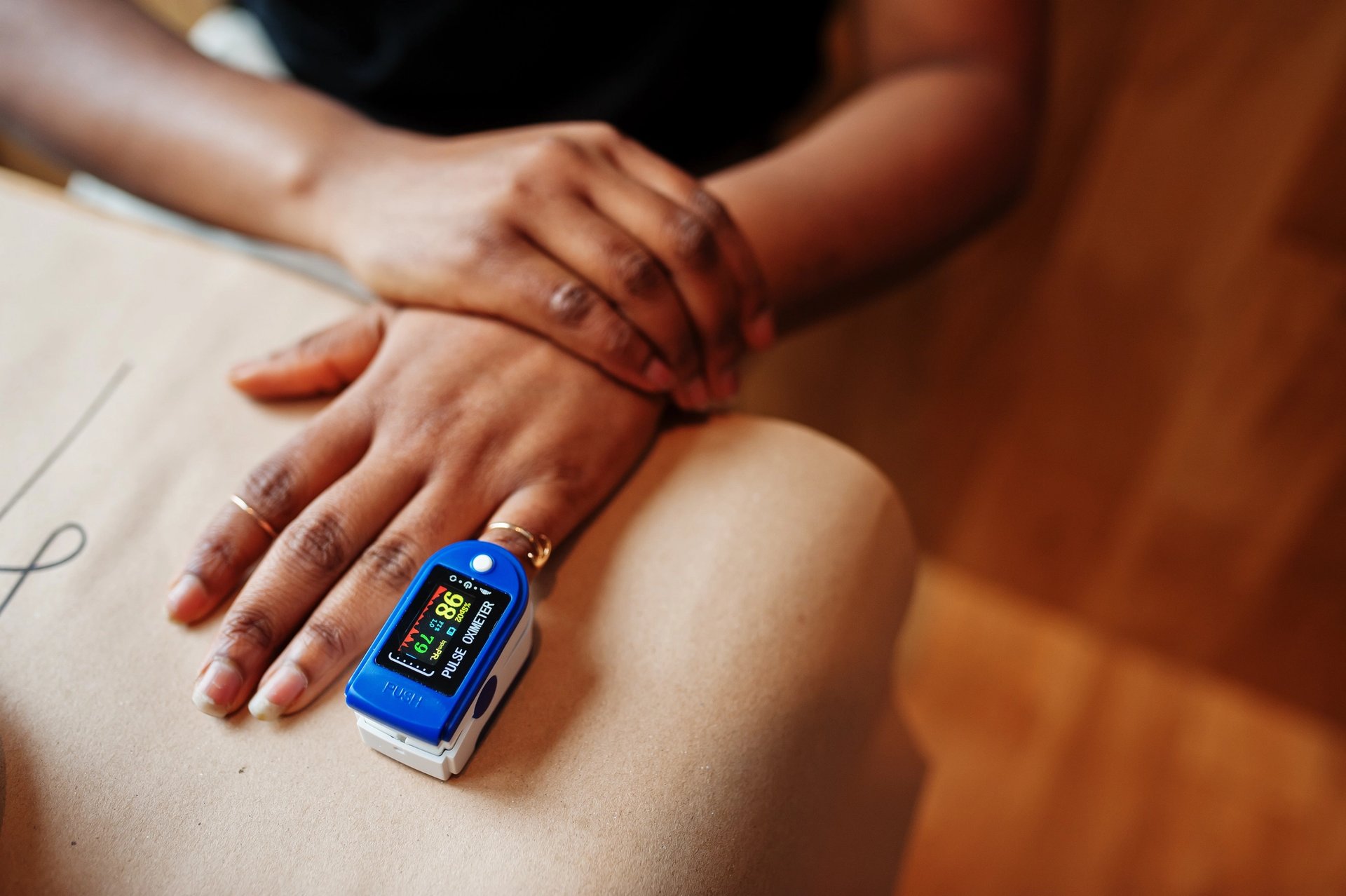
Image: Adobe Stock

In medical school, I learned that being Black could change the answer to a math problem.
The equation was called estimated glomerular filtration rate, or eGFR, and it was used to estimate how well a patient's kidneys were working. At the time, many commonly used versions of the equation included a correction for race. If a patient was identified as Black, the formula returned a kidney function estimate roughly 16 percent higher than for a non-Black patient with the exact same age, sex and laboratory values. That meant a Black patient was assumed to have better kidney functioning for one simple reason: their race. [1]
I remember learning the equation the same way I learned hundreds of other facts in medical school: memorize it, understand when to use it and move on to the next thing. But eventually, I started asking a different question. Why should identifying a patient as Black change our estimate of how well their kidneys function?
The answer led me down a path that fundamentally changed the way I thought about medicine. The race correction was based, in part, on an assumption that Black people had greater muscle mass on average, leading to higher levels of creatinine, the substance measured in the blood to estimate kidney function. [2]
The more I learned, the more troubling the assumption became. Race is not a direct measurement of muscle mass or a measurement of kidney physiology. Yet for years, race was built into a calculation that could make kidney disease appear less advanced than it truly was. That delayed referrals to specialists, altered how chronic kidney disease was staged, and even pushed back the moment a patient became eligible for the kidney transplant waiting list. [2][3]
There was no flashing warning when the equation was used. No message that appeared explaining the history behind the calculation. The result simply showed up in the medical record as a number. And so it looked objective. It looked precise. And that is what makes this kind of bias so difficult to recognize.
When we talk about racial bias in medicine, we often imagine an interaction between two people: a physician who does not listen to a patient or a stereotype that influences how someone's pain is perceived.
Those forms of bias are real and consequential. But some of the most powerful biases in medicine don't look like bias at all. Sometimes, bias looks like precision.
They can be embedded in an equation, a clinical guideline, an algorithm, or a medical device. And once they are built into the infrastructure of medicine, they can influence millions of decisions without any individual clinician consciously deciding to treat patients differently.
None of this means race can never carry useful information. Used deliberately and for a defined reason, it can sometimes help reduce disparities rather than entrench them. The problem is not the presence of the variable. The problem is using it as a catch-all proxy without asking what it represents.
And once you start looking, kidney function is not the only place the proxy appears. For years, race was also incorporated into the interpretation of pulmonary function tests, which measure how well a person's lungs work. The practice rested on the idea that expected “normal” lung function differed between racial groups. An assumption whose roots reach back to the mid-nineteenth century, when the spirometer itself was used to argue for innate racial difference. A patient's measured lung capacity could therefore be interpreted differently depending on the race assigned to them, even though the differences researchers observed too often reflected other variables like environment, occupation and exposure. Not innate biology. [4][5]
That distinction matters. Race can correlate with health outcomes, but correlation does not make race a biological mechanism. When researchers find differences between racial groups, race may be standing in for something else entirely. For example, it could be environmental exposures, occupation, access to health care, chronic stress, or countless other factors that shape our bodies over a lifetime. If we simply put "race" into an equation, we risk taking the consequences of inequality and turning them into presumed biological differences.
And this problem extends beyond equations. One of the clearest examples is a device so common that most of us barely think about it: the pulse oximeter.
Pulse oximeters estimate the oxygen level in the blood by shining light through the skin. I use them constantly as a physician. If you've ever been to an emergency room or a doctor's office, you've probably had one clipped onto your finger. The number they produce can help determine whether someone needs oxygen or more invasive treatments.
But research has found that pulse oximeters tend to overestimate the true oxygen level in people with darker skin. The device can display a reassuring number even when the oxygen measured directly in the blood is dangerously low. This phenomenon is called “occult hypoxemia,” which occurs in Black patients at roughly three times the rate seen in white patients. The concern is significant enough that the FDA issued a formal safety communication about it in 2021. [6][7]
Imagine being a patient struggling to breathe while the device clipped to your finger tells everyone in the room that your oxygen level is fine.
Imagine being the clinician looking at that monitor and trusting the number because you were taught that the technology was objective. No one in that room has to consciously decide that one patient deserves worse care. The inequity can already be built into the tool.
That realization is important because it changes what we have to do about it. We absolutely need to address interpersonal bias in medicine. We need clinicians who listen to patients and fight against their own assumptions. But we cannot train our way out of a problem that is also embedded in our infrastructure. Instead, it requires examining the infrastructure itself.
That means asking who was included when a medical device was developed and tested. It means asking why race appears in an equation and what it is actually supposed to represent. It means studying whether an algorithm performs differently across populations before deploying it widely and continuing to study it after it enters clinical practice. Most importantly, it means becoming comfortable asking a deceptively simple question: why is this variable here?
That question does not weaken science. It strengthens it.
The movement away from race-based medicine is sometimes framed as though equity requires us to ignore differences between people. But the goal should be exactly the opposite. We should understand those differences more precisely.
And here is the part that is easy to miss: simply deleting race from an equation is not, by itself, the answer. When race is removed, the numbers move, and so does who gets diagnosed, who is rated as disabled and who becomes eligible for treatment. One analysis estimated that switching to race-neutral lung-function equations would reclassify breathing impairment for more than 12 million people and shift more than a billion dollars in disability compensation, while barely changing how accurately the equations predicted outcomes. In some models, naïvely stripping out race can even introduce new bias rather than removing it. [8][9]
The point is not to erase a variable and move on. It is to understand what that variable was standing in for. When we do that, better tools follow.
If muscle mass matters for a calculation, we should measure physiology directly rather than assuming race can tell us what someone's muscle mass is. If skin pigmentation affects the accuracy of a device, we should study skin pigmentation directly and design technology that works across the full range of patients who will depend on it. When the revised calculator for predicting a successful vaginal birth after cesarean replaced race with a history of chronic hypertension, the factor that was actually driving the difference, it eliminated the disparity without losing accuracy. [10]
Medicine has already begun doing this work, and in at least one case it has gone further than reform. It has offered reparations. Major organizations have moved away from race-based kidney function equations. In 2022, the national transplant system barred the use of race-based eGFR, and it then required transplant centers to go back and restore the waiting time that Black candidates had lost under the old formula. An acknowledgment that a biased number had real, measurable costs. [1][10] Pulmonary medicine has reconsidered the use of race in interpreting lung function. Researchers, regulators, clinicians and patients have pushed for closer scrutiny of how pulse oximeters perform across skin tones.
Those changes do not mean that medicine failed because it corrected itself. The willingness to correct ourselves is exactly what science is supposed to look like.
Every equation has a history. Every clinical cutoff reflects choices about what counts as “normal.” Every algorithm learns from data collected from particular people, in particular places, at particular moments in time. Those tools can be extraordinarily powerful. I rely on them every day as a doctor. But we should never confuse a number with a law of nature simply because it appears on a screen.
The question is not whether we should trust science. The question is whether we are willing to apply the same scientific scrutiny to the tools we have inherited that we apply to the discoveries we hope to make next.
Because bias does not become harmless simply because we convert it into mathematics. And equity in medicine is not about making science less rigorous. It is about finally making our science rigorous enough for everyone.
References
- Wait Time Modifications for Black Transplant Candidates Affected by Race-Based Kidney Function Estimation. Khazanchi R, Fleishman A, Eneanya ND, et al. JAMA Internal Medicine. 2026;:2846010. doi:10.1001/jamainternmed.2026.0001.
- New Creatinine- and Cystatin C–Based Equations to Estimate GFR without Race. Inker LA, Eneanya ND, Coresh J, et al. The New England Journal of Medicine. 2021;385(19):1737-1749. doi:10.1056/NEJMoa2102953.
- A Unifying Approach for GFR Estimation: Recommendations of the NKF-ASN Task Force on Reassessing the Inclusion of Race in Diagnosing Kidney Disease. Delgado C, Baweja M, Crews DC, et al. Journal of the American Society of Nephrology: JASN. 2021;32(12):2994-3015. doi:10.1681/ASN.2021070988.
- Clinical Algorithms and the Legacy of Race-Based Correction: Historical Errors, Contemporary Revisions and Equity-Oriented Methodologies for Epidemiologists. Horsfall LJ, Bondaronek P, Ive J, Poduval S. Clinical Epidemiology. 2025;17:647-662. doi:10.2147/CLEP.S527000.
- Race and Ethnicity in Pulmonary Function Test Interpretation: An Official American Thoracic Society Statement. Bhakta NR, Bime C, Kaminsky DA, et al. American Journal of Respiratory and Critical Care Medicine. 2023;207(8):978-995. doi:10.1164/rccm.202302-0310ST.
- Understanding pulse oximetry in hematology patients: Hemoglobinopathies, racial differences, and beyond. Patterson S, Sandercock N, Verhovsek M. American Journal of Hematology. 2022;97(12):1659-1663. doi:10.1002/ajh.26721.
- Racial and Ethnic Disparities in Occult Hypoxemia Prevalence and Clinical Outcomes Among Hospitalized Patients: A Systematic Review and Meta-Analysis. Parr NJ, Beech EH, Young S, Valley TS. Journal of General Internal Medicine. 2024;39(13):2543-2553. doi:10.1007/s11606-024-08852-1.
- Implications of Race Adjustment in Lung-Function Equations. Diao JA, He Y, Khazanchi R, et al. The New England Journal of Medicine. 2024;390(22):2083-2097. doi:10.1056/NEJMsa2311809.
- Racial and Ethnic Bias in Risk Prediction Models for Colorectal Cancer Recurrence When Race and Ethnicity Are Omitted as Predictors. Khor S, Haupt EC, Hahn EE, et al. JAMA Network Open. 2023;6(6):e2318495. doi:10.1001/jamanetworkopen.2023.18495.
- Citing Harms, Momentum Grows to Remove Race From Clinical Algorithms. Kuehn BM. JAMA. 2024;331(6):463-465. doi:10.1001/jama.2023.25530.