
What It Means to Bring the Buffalo Home

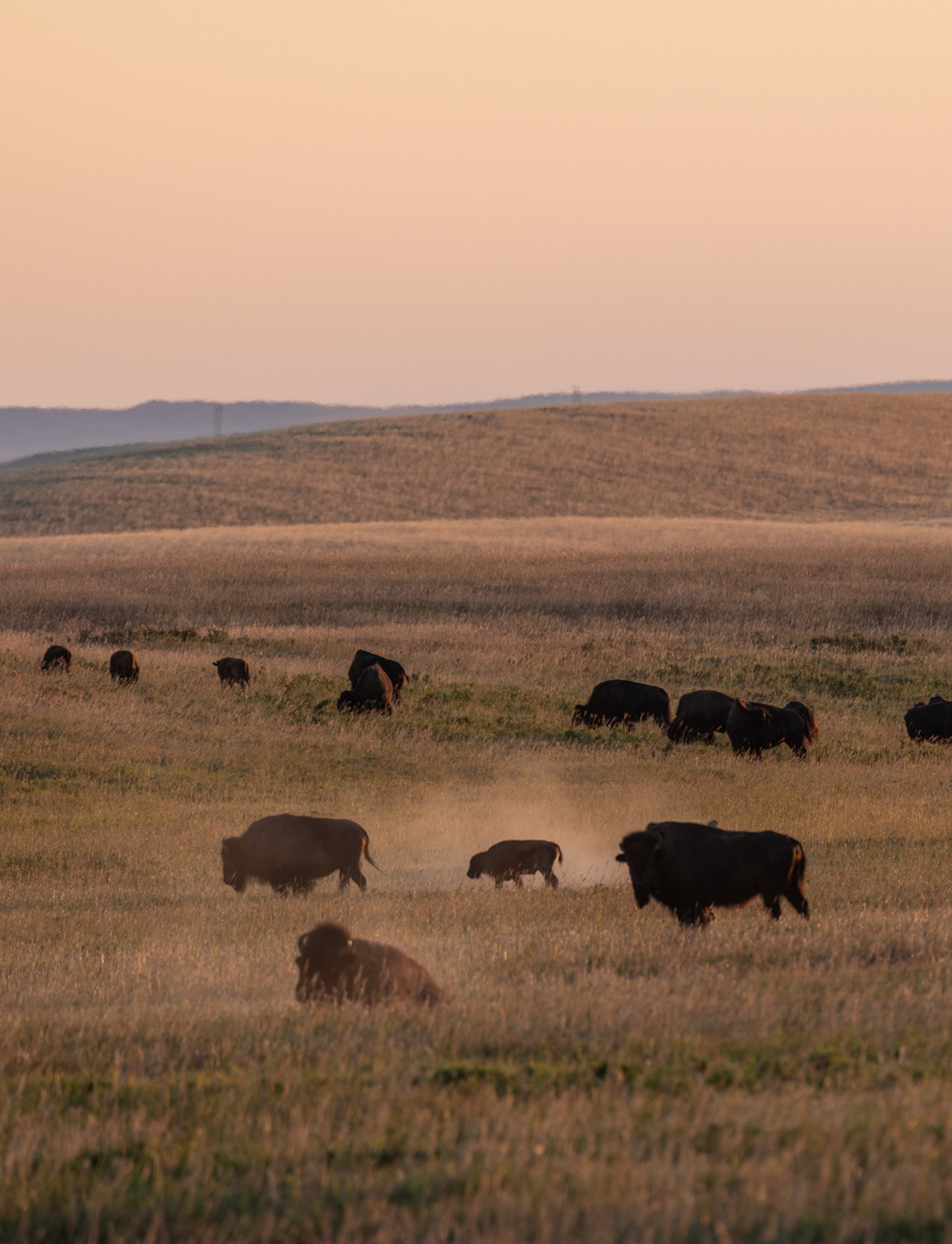
My favorite place to be is on the Fort Peck Assiniboine/Sioux Tribes Turtle Mound Buffalo Ranch. I love to witness the buffalo roam the grasslands, moving with the natural landscape. It is where I am most at home.
In our oral histories, the buffalo are relatives, not symbols or resources. Their near extinction in the nineteenth century was no accident of history. It was tied to the same colonial violences our people endured, the push to starve us, confine us, and sever us from our lands. When I watch the herd, I see survival and kinship, and I see what becomes possible when a relationship is allowed to mend.
You may often hear it said that we need the buffalo to return home to heal the people. That is true. But what is less often said aloud is that the buffalo also need to return so that they, the land, and the waterways can heal. Healing moves in every direction. This is reciprocity, and it sits at the heart of Indigenous sciences, knowledge systems built over countless generations of careful observation, relationships, and responsibility.
Indigenous-led conservation is where those sciences are practiced today.
Indigenous-led conservation is a true embodiment of sovereignty. Tribal Nations and communities are the decision-makers and stewards of their ancestral lands and waters. They are not stakeholders to be consulted or partners invited once the plans are set.
After generations of disenfranchisement, you might expect these knowledge systems to have been lost. They were not. Indigenous sciences, oral histories, and deep understandings of the natural world have remained intact, carried forward through ceremony, language, and family. Entrusting Tribal Nations and communities to invoke these knowledge systems is the ultimate guide to our shared vision of a thriving world.
The opportunity is enormous, and it is not only for Native people. Healthy grasslands, clean waterways, and thriving wildlife benefit every community downstream, every farmer and rancher, every child who will inherit the future. Indigenous-led conservation offers a model built on long-term thinking, where success is measured across generations rather than fiscal quarters. When we support it, we invest in solutions that have already been tested by time.
The barriers are real, and most are not about the land. They are about systems. Western institutions, including funders, agencies, and conservation organizations, have long dictated how resources, authority, and power move. Funding often arrives with rigid timelines and report requirements that do not match the rhythms of the natural world. Tribes are frequently approached at the eleventh hour, asked to endorse plans that were designed without them.
Unči Maka, Grandmother Earth, does not follow our systems. Yet for generations we have forced her to fit within what we decided needed to happen. The results of that approach are all around us.
If we want something different, we have to be willing to change how we work. That starts with a few honest steps:
- Revisit our strategic plans: Organizations should look at where relationships with Tribal Nations fit within their scope from the beginning. Tribes should never be an afterthought.
- Build flexible evaluation systems: Measure long-term impact rather than annual accomplishments, because healing a landscape takes longer than a grant cycle.
- Invoke trust, respect, and reciprocity: These are not buzzwords. They are practices, and they require us to listen, to share power, and to stay in the relationship when it is uncomfortable.
None of this is easy, and it asks those of us inside institutions to give something up. Control, certainty, and the comfort of familiar processes. But what we gain is far greater.
I think often about the buffalo moving across the grasslands, unhurried and certain, shaping the land as it shapes them. They remind me that we are not separate from the natural world, and that our wellbeing is bound to hers. Supporting Indigenous-led conservation is not charity or a favor. It is how we all find our way home, and that is what our natural world needs.
Dr. Jessa Rae Growing Thunder
Wičaŋpi Maza Wakaŋ Wiŋ
Fort Peck Assiniboine/Sioux
Deputy Director, BLIS Collective