
Creative Labor, Creative Conditions: Why Centering Artists as Thought Leaders and Changemakers Matters
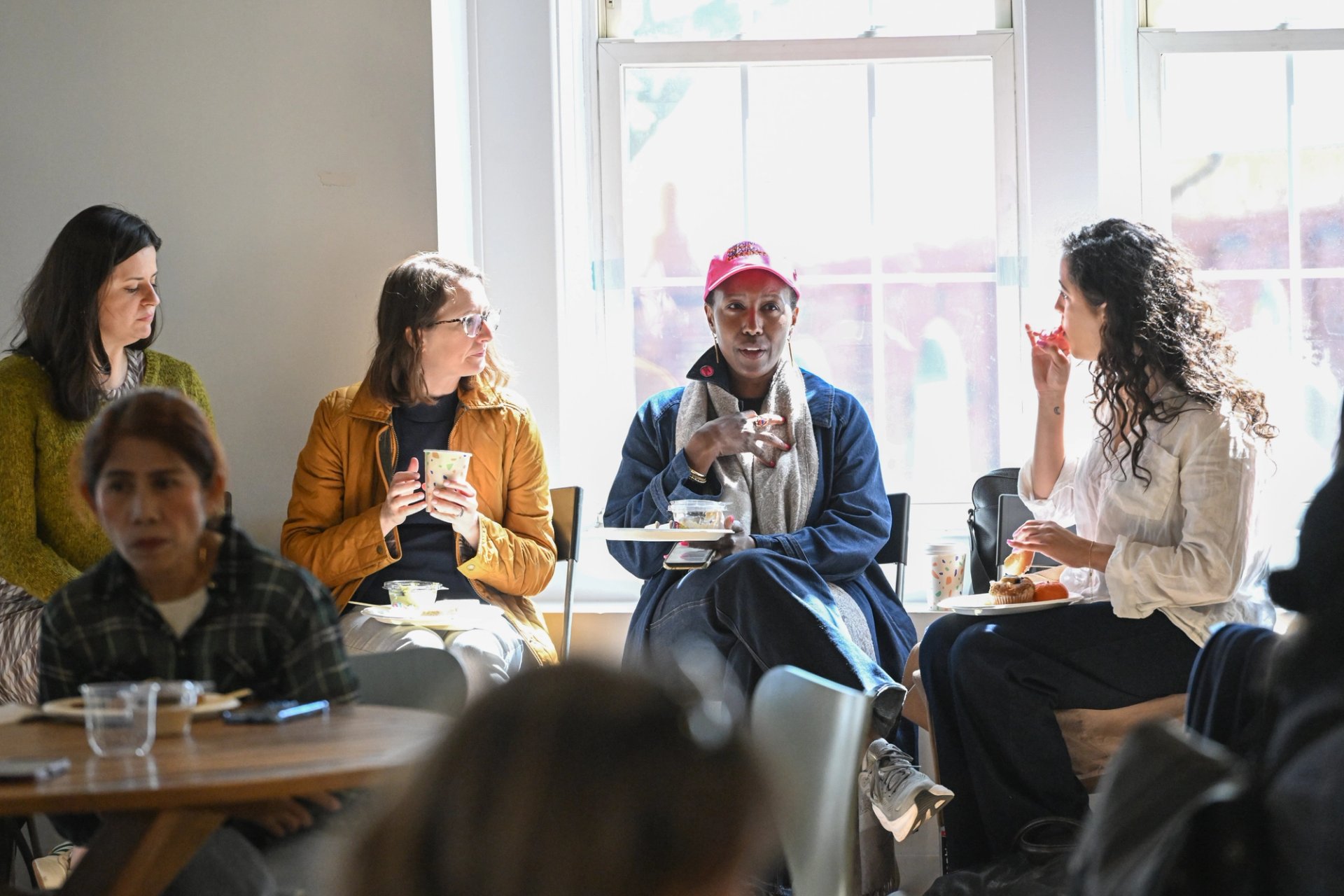
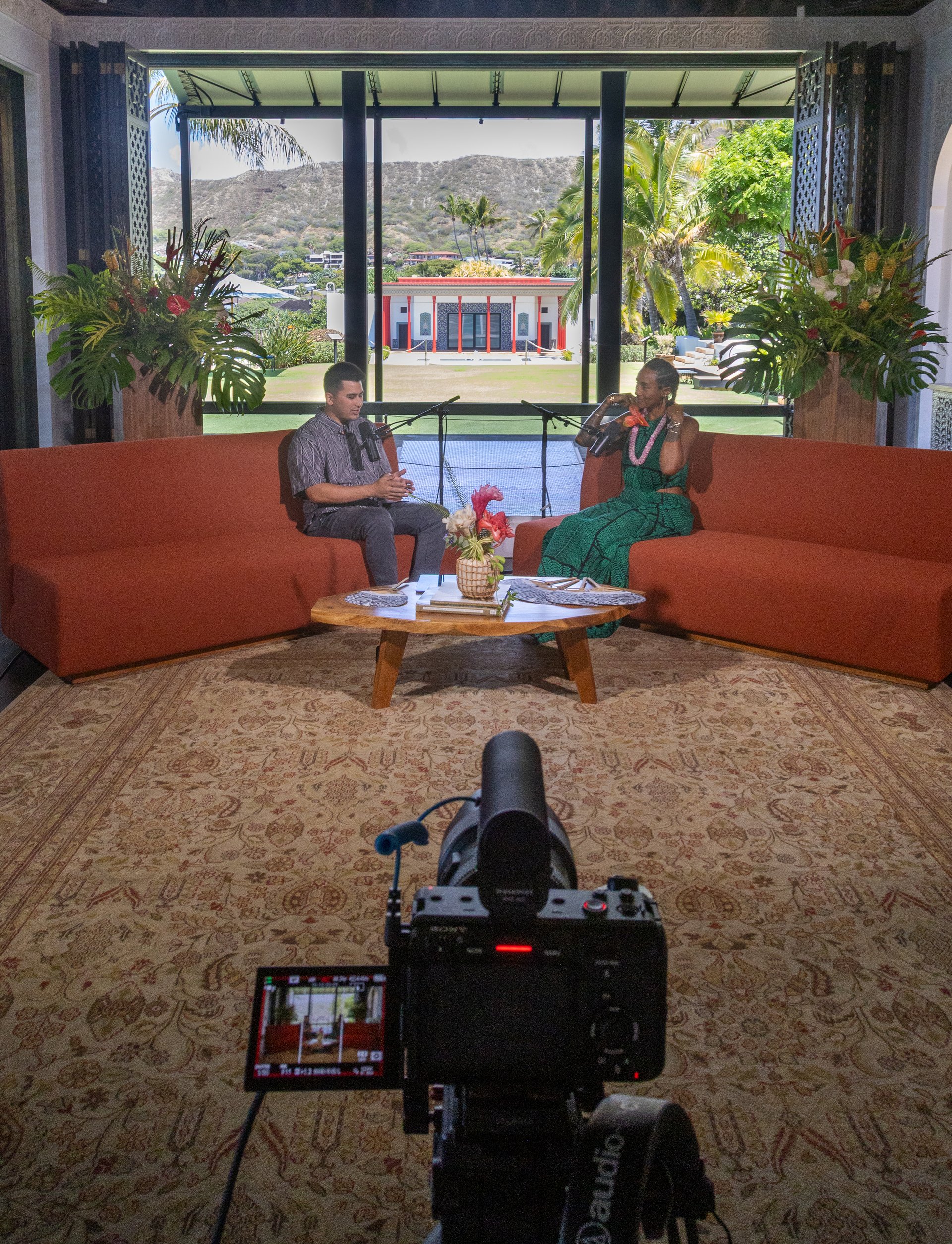
Nataki Garrett at the Creative Labor, Creative Conditions May Day 2026 activation hosted by the Lower Manhattan Cultural Council / Laura Pedrick Photography
I have spent my life in rooms where artists are asked to do the impossible. To hold complexity without flinching. To translate grief into meaning. To imagine futures when the present feels unbearable. Again and again, I have watched artists step into moments of rupture—social, political, cultural—and offer language, form, and vision when other systems have failed. What I have seen just as consistently, however, is how rarely the conditions surrounding that labor are designed to sustain the people doing it. We celebrate the work while neglecting the worker. We depend on artists to help us make sense of the world while offering them instability, precarity, and silence in return. The Creative Labor, Creative Conditions campaign matters because it names this contradiction and insists that we address it directly.
We are living through a period of escalating violence, deepening isolation, and increasing pressure on cultural expression. The urgency of this moment cannot be overstated. Artists feel these conditions in their bodies and in their work long before they become headline language. They register what is shifting beneath the surface of public life. They make visible what is being erased. And they do this not from a place of abstraction, but from lived experience—often while navigating economic insecurity, political vulnerability, and emotional exhaustion. To talk about creative labor today without talking about conditions is to miss the point entirely. Artistic labor is not separate from civic life; it is foundational to it.
My belief in artists as thought leaders and cultural changemakers has been shaped not only by theory, but by practice.
When I led Oregon Shakespeare Festival, a large regional theater with a $44M budget, my vision was to recenter the purpose of the institution itself—to reimagine the theater not as a site that primarily serves patrons, but as an intentional platform designed to serve artists and support them in doing their work. I believed, and still believe, that when artists are centered—when they are given the conditions, trust, and autonomy to fully inhabit their craft—the world benefits. The regional theater model, however, has long behaved as if the space of the theater exists for the audience and institution, rather than as a shared civic commons rooted in artistic labor. Shifting that orientation proved difficult, because it challenged deeply held assumptions about who the theater is for and whose needs come first. Yet my goal was never to diminish the audience or donors; it was to remind us that the audience’s deepest benefit comes from encountering work shaped by artists who are not extracted from, but fully supported. Artists, with their ear to the ground and their understanding of the zeitgeist, offer a distillation of culture that no other sector can replicate. When they are centered, culture moves.
That conviction was further shaped through my work with One Nation One Project and the Arts for Everybody initiative, a time-based national arts and health initiative that concluded in June 2025. Arts for Everybody explored the role of artists in civic engagement often intersecting with health initiatives, examining how creative practice can function as a bridge in communities experiencing polarization, disconnection, and distrust of institutions.
Working alongside artists embedded in their local contexts made one truth unmistakably clear: civic engagement through the arts is only as strong as the conditions surrounding the artists themselves.
Artists cannot sustain public-facing, community-centered work if they are operating without stability, care, or institutional support. The project may have had a defined endpoint, but its lessons continue to inform how I understand the relationship between creative labor, civic responsibility, and cultural transformation.
Federico García Lorca wrote about duende as a force that rises from the soles of the feet—a dark, embodied power born of struggle, risk, and truth. Duende is not polish or perfection; it is the spirit of artistic revolution, the willingness to confront what is unresolved and dangerous in order to transform it. That spirit feels especially urgent now, as cultural institutions like the Kennedy Center are overtly politicized and taken over, we are reminded that art holds real civic and political power—power significant enough to be contested, controlled, and co-opted. The attempt to hijack culture is itself proof of its power. In moments like this, artists are not peripheral to democracy; they are central to its defense.
This is why the Creative Labor, Creative Conditions campaign feels so aligned with my life’s work. It recognizes artistic labor as civic labor and asks us to take seriously what that recognition demands. It challenges us to examine how our institutions, funding structures, and cultural norms either support or undermine the artists we rely on to help us navigate this moment. It insists that care is not a soft value, but a structural one; that equity is not a performance, but a practice; and that autonomy is essential if artists are to function as truth-tellers and visionaries rather than service providers in a cultural economy.
What draws me to this campaign is its refusal to separate values from action. Creative Labor, Creative Conditions asks what it would mean to build partnerships that are not extractive, to design processes that are humane, and to approach collaboration as a shared responsibility rather than a transaction. It understands that sustainability is not simply a question of funding levels, but of power, trust, and alignment. These are the same questions I have wrestled with throughout my career, and they are the questions that will determine whether artists can continue to lead cultural transformation in the years ahead.
We are at a moment when the country is searching for new forms of cohesion and meaning. Artists are already doing that work. They are interpreting the present and rehearsing the future in real time.
The question is whether we will meet them with conditions that honor the scale and significance of their labor. Creative Labor, Creative Conditions invites us to align our practices with what we claim to value and to recognize that the cultural future of this country depends on artists who are not only celebrated, but truly supported.
Centering artists as thought leaders and changemakers is not an abstract aspiration for me; it is a throughline that has shaped my leadership, my writing, and my civic engagement. When artists are given the conditions to thrive, they offer us more than art—they offer us clarity, courage, and a deeper understanding of who we are and who we might yet become. That is why this work matters. And that is why this moment demands nothing less.